

Why your feet are fine at nine and swollen by three, and how my patient stopped the swelling in three days

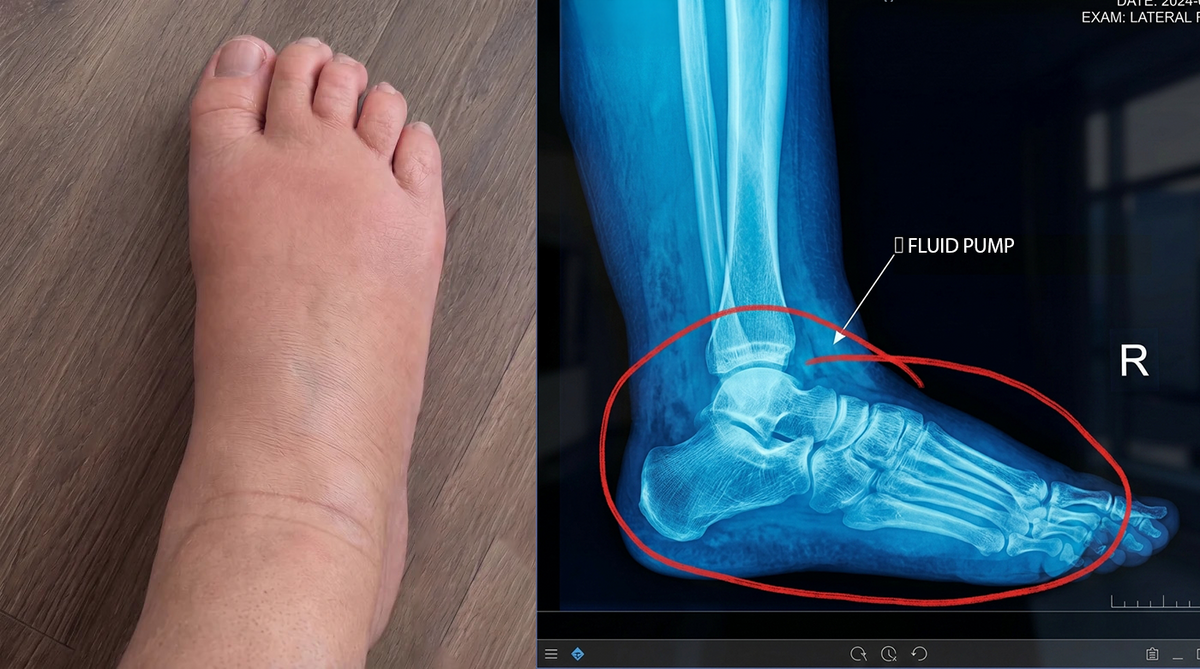
In sixteen years of practice I've had all sorts of people in front of me with all sorts of problems, but the one that stuck with me more than any other is women over fifty with swollen feet and ankles. Out of the ten patients I saw in a day, at least three came in with exactly that.
Over the years I got far better at it than I expected to, and that's entirely down to one patient.
I'll be honest, I didn't much like her at first. She questioned everything I did and always had a counter argument ready before I'd finished my sentence, and I remember thinking I was the one who'd studied this and she hadn't.
But she was right about the part that mattered, and what we worked out between us has given me close to a hundred percent success rate with every woman who's come to me since.
I'll call her Jean, because I can't use her real name. And it started with something she said that I brushed off at the time.
She started talking before she'd even sat down
You may well recognise some of it.
Fine in the morning, but by the afternoon her feet were killing her and her ankles were swollen to high heavens.
None of her shoes fitted by the end of the day. Comfortable when she put them on, cutting into her by four.
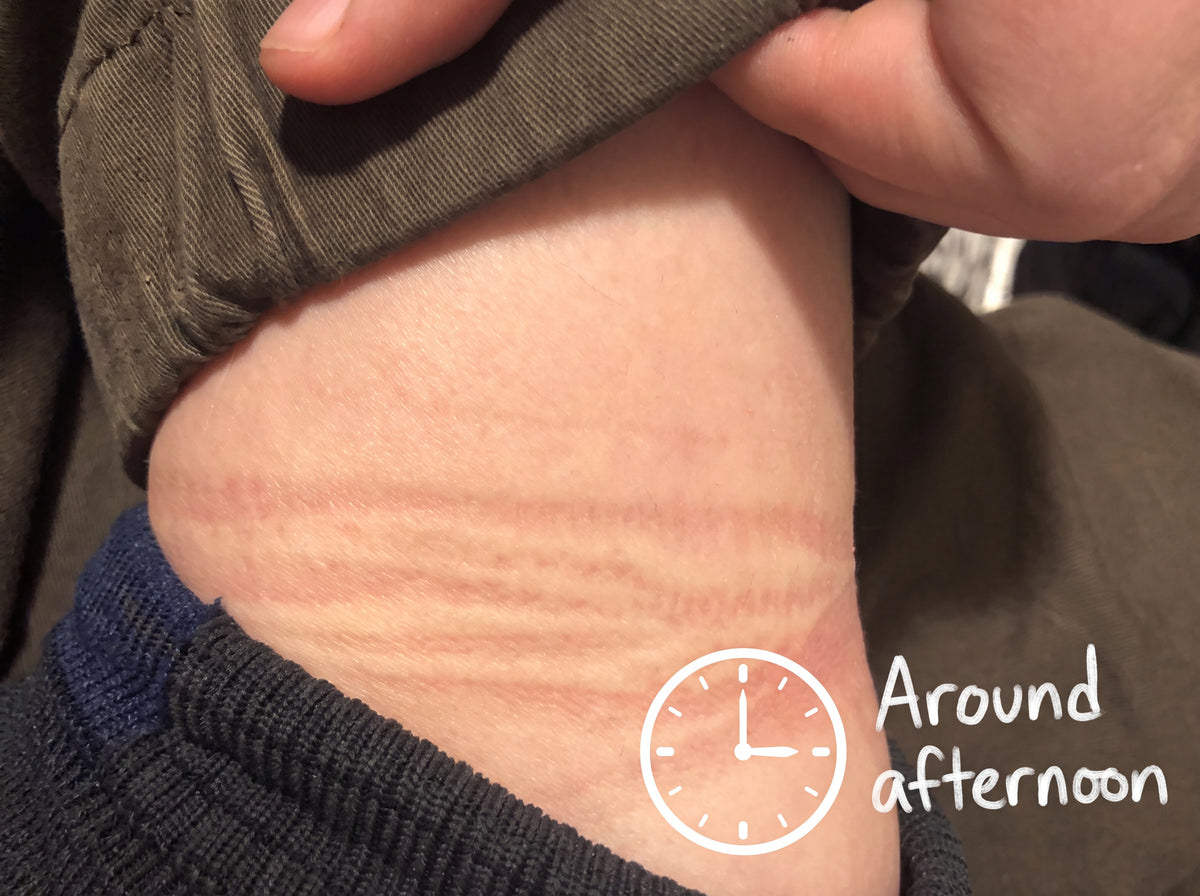
The sock marks were the worst of it. Deep grooves in her legs every night that took forever to fade.
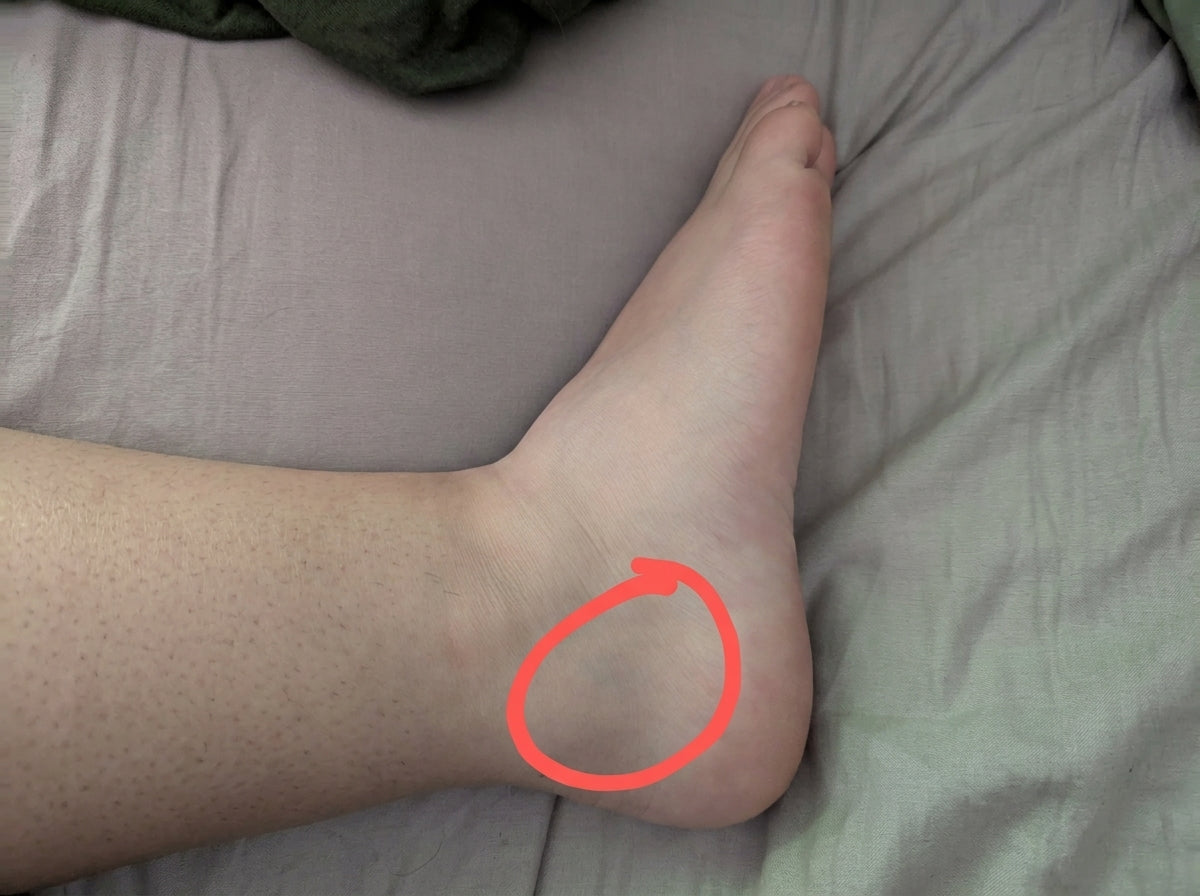
Then she went through everything she'd already tried, which is the same list I hear from nearly everybody.
She'd been putting her legs up on the arm of the sofa every evening and stacking pillows under her feet in bed. She'd cut back on salt. She'd started drinking more water on the theory it might flush something out.
She'd spent an uncomfortable amount on good shoes, then more again on insoles to go inside them. And she'd bought compression socks online, worn them twice, and put them in a drawer.
None of it had made the slightest difference to how her feet felt by the middle of the afternoon.
So I told her to do the one thing that would make it worse.
I gave her my usual remedy, and she handed it straight back
I told her what I told everybody in those days. Go and buy a pair of knee-high compression stockings, and wear them daily.
She said no.
She'd tried them. They were hot, they were a fight to get into, and they'd done nothing at all. She looked straight at me and said there must be another way, and that if I couldn't tell her what it was, I ought to go and find out.
That stung. But she was my patient, so I did the only honest thing available and went back to the beginning.
What I found took me two months, and it wasn't in anything I'd been taught.
Discovery 1: everything is built around the ankle
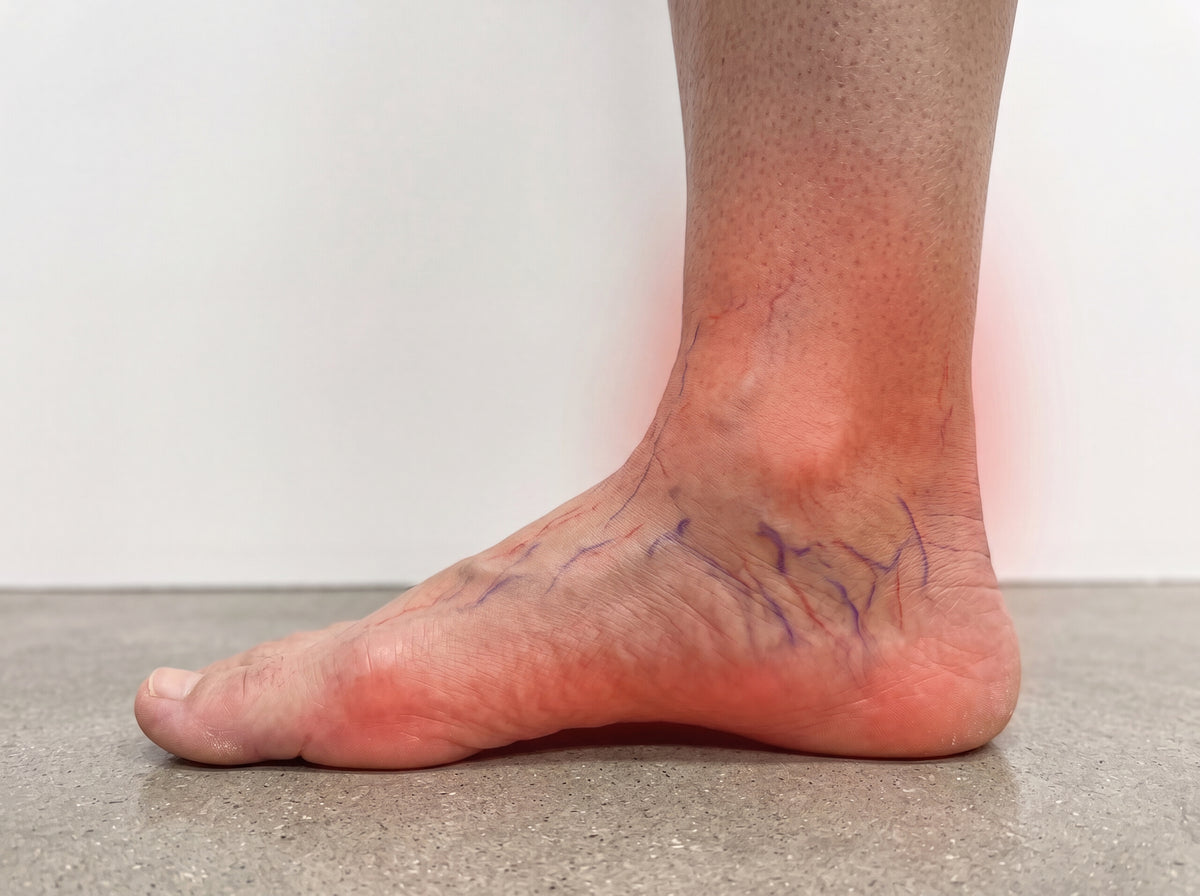
Pick up any compression sock ever made and you'll find the same idea underneath it. The pressure is firmest at the ankle. The ankle is the narrowest part of the leg, so the thinking goes that squeezing it pushes the fluid upward.
It sounds sensible. It's what I was taught. And it is aimed at completely the wrong place.
Your ankle isn't a pump. It's a doorway.
The real pump sits in the sole of your foot. There's a reservoir of blood held underneath your arch, which a French surgeon wrote up back in the 1890s and named the venous sole.
Every step you take, your arch flattens under your weight and springs back. That movement squeezes the reservoir and pushes blood up through your ankle and into your leg, where the calf catches it and carries it the rest of the way.
So your arch does the pushing, and your ankle is only what the fluid travels through on its way out.
Which means clamping the doorway is the last thing you want to do. If the pump underneath has stalled and you tighten a band around the exit, you haven't helped anything move. You've given it one more thing to get past.
Jean got there before I did, mostly by refusing to accept the first answer she was given.
But that on its own doesn't explain why you're fine at nine and finished by three. That was the second thing we found.
Discovery 2: why it always happens at the same time of day
Your arch is held in shape by soft tissue, not bone. And soft tissue that has carried you around for sixty years gets tired, the same as the rest of you.
In the morning, after a night off, it still springs properly. It flattens, it rebounds, and the pump underneath does its job. That's why your feet are fine at nine, and why you've spent years assuming nothing is wrong.
By the middle of the afternoon that arch has been flattened a few thousand times, and it stops rebounding. It just stays down.
A flat arch isn't a broken arch. It's a stalled pump. And a stalled pump means the fluid stops leaving your feet.
Which is when I realised both pairs in your drawer are working against you.
That is why I told her to stop wearing both if she wanted a lighter feeling in her feet


The long stockings get it wrong twice over. Their firmest pressure lands straight on the ankle, which is the doorway rather than the pump, and the rest of their work goes into the calf, which is the last stage of the journey rather than the first.
On top of that they're hot enough that most women peel them off by lunchtime, they're a fight to get into, and inside your shoe they're a flat tube that does nothing at all for the arch that actually stalled.
And the ordinary pair you have on right now is no better. A normal sock is a thin flat tube with one elastic band at the top. There's no structure under your arch, so your foot flattens all day with nothing helping it back up, and that single band sits exactly where the doorway is.
Those grooves in your legs at night aren't a sign your socks are slightly tight. They're a dam, sitting on the one spot that needed to stay open.
So I went looking for something that did neither.
And I found something that matched my requirements


A cushioned panel under the arch, so it keeps flexing instead of lying flat all afternoon. Compression gentle and graduated rather than a hard band, so the ankle is supported without being clamped. Thin enough to breathe so it's still on at four rather than in the drawer by one. Easy to pull on. And nothing left behind in the skin at night.
And the strange part is that they were already sitting in a drawer in my own clinic.
We'd been giving Archly to plantar fasciitis patients for about a year, purely for the arch support, because that is what they're built for and it's all I'd ever used them for.
Then one of them said something in passing that I very nearly missed. She'd come in about her heel, and somewhere in the middle of it she mentioned that her ankles had stopped swelling in the evenings. She hadn't thought it worth raising, because it wasn't what she'd come about.
I went and turned one of the socks inside out, which is what I do with everything. And there it was.
The arch panel knitted in, not stuck on afterwards.
Gentle graduated compression, with no tight band anywhere.
On in one movement, and thin enough to breathe.
Every single thing Jean and I had gone looking for, sitting in a drawer in my own clinic, being handed out for the wrong problem.
I gave her a pair that week and told her to give it a month.
What happened to Jean
She wrote to me a few months later to say she'd been back out in the garden after tea, and that she'd started staying for her granddaughter's swimming lesson instead of waiting in the car. She sent a photo of her feet with it.
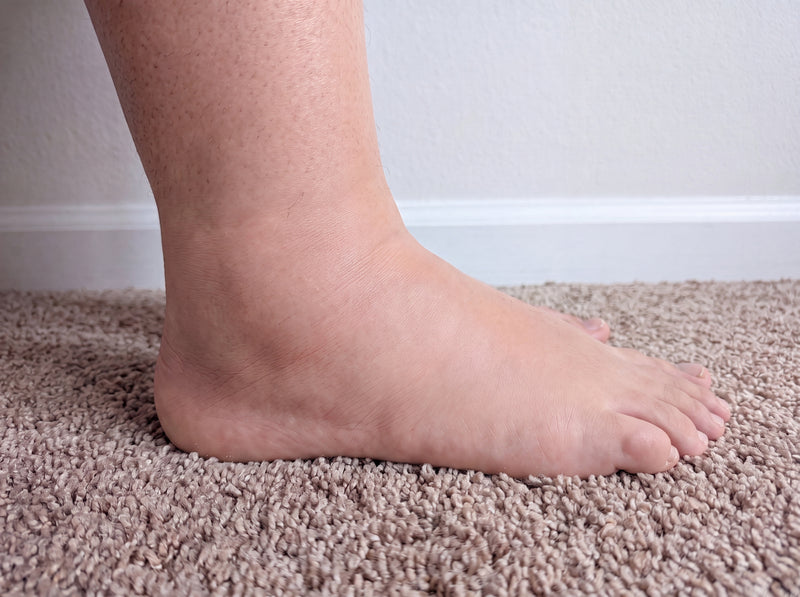
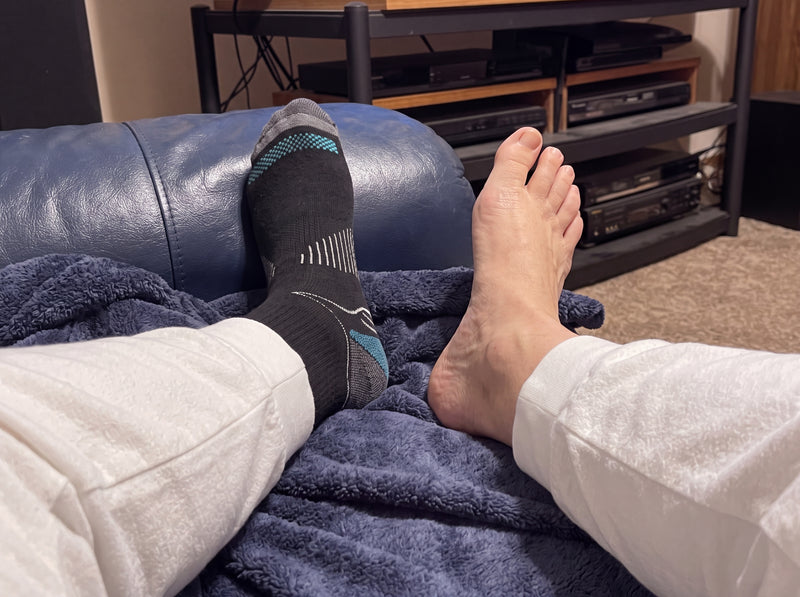
What she actually wrote was: "I can't believe it was my socks the whole time."
If it's both feet, and it gets worse as the day goes on, and worse still in the heat, and you've spent years quietly filing it under your age, I'd like you to stop believing that last part.
Your arch is tired. It isn't finished.
I keep a few pairs in the clinic for patients who want to start straight away, but honestly, I tell most women with afternoon swelling to just order a pair online and give them a go.
You should notice something the very first afternoon you wear them. Nothing dramatic. Just that four o'clock arrives and your feet haven't gone heavy on you. And it builds from there, because every day your arch spends supported is a day it isn't being flattened for ten hours straight.
If nothing changes, you send them an email and send the socks back. They're a decent, straightforward company about it, thirty days, no argument. Which is the only reason I'm comfortable telling anybody to try something in the first place.
Click the button below to see if they're still available.
Click the button to see if they are still available →
Emma Vos is a podiatrist in London. Most of her sixteen years in practice have been spent with women who were told their afternoon swelling was simply their age. This piece is based on one patient who refused to accept that answer.
Frequently asked questions
How long before I notice a difference?
Most women know inside a fortnight, and the guarantee runs for thirty days. Wear them on ordinary days on your feet, not only the hard ones.
Can I wear them instead of my compression stockings?
If your stockings were prescribed for a diagnosed vein condition, keep wearing them and speak to whoever prescribed them. If you bought them yourself for afternoon swelling, this is the pump they were never reaching.
Will they leave a mark on my leg?
No. There is no single tight band at the top. The compression is gentle and graduated, and the ankle is supported rather than clamped.
Are they too hot for summer?
The knit is thin and open, which is the whole point. A sock that comes off at lunchtime does nothing for your three o'clock.
When should I see my GP instead?
If the swelling is in one leg and not the other, if it came on suddenly, or if there is heat, redness or pain with it, see your GP this week. Please don't wait on a sock.
Both feet, worse as the day goes on, worse still in the heat: that is a stalled foot pump, not your age. The thirty day money back guarantee means you only have to be willing to find out.
Click the button to see if they are still available →Comments
7 comments on this article
Does your afternoon sound like Jean's? Share your experience or ask Emma a question.
Comments are moderated and may take up to 24 hours to appear.

The three o'clock thing made me put my cup down. That is exactly it. Fine all morning, then I want to sit with my feet up by mid afternoon and I've been blaming turning sixty.

That pattern is the whole point, Margaret. Age doesn't wait until three. Something that was working at nine has stopped by then.

I have two pairs of stockings in a drawer that cost me a fortune and never once stayed on past lunch. Nobody told me why they weren't working.

Second week in mine. The ring around my ankle in the evening has gone, which I didn't expect to care about as much as I do.

Mine is only the left ankle and it started quite suddenly in June. Should I still try these?
Susan, one leg and sudden onset is a see your GP this week answer, and I mean every word of it. Please don't wait on a sock.

On my feet six hours a day in a school. The arch panel is the first thing I've worn that I can actually feel doing something.
Ordered the wrong size first, they swapped them without any fuss. Worth saying because that part usually isn't easy.

My size was gone when I first looked and came back a fortnight later. Worth checking again if yours isn't there.